
20 May 2026 · By Vistiqo Editorial
Digital vs. Paper Guest Directories: Which Wins for Boutique Hotels?
A side-by-side comparison of digital room directories and traditional paper binders — translation, live updates, WhatsApp, and the real cost of each format for boutique properties.
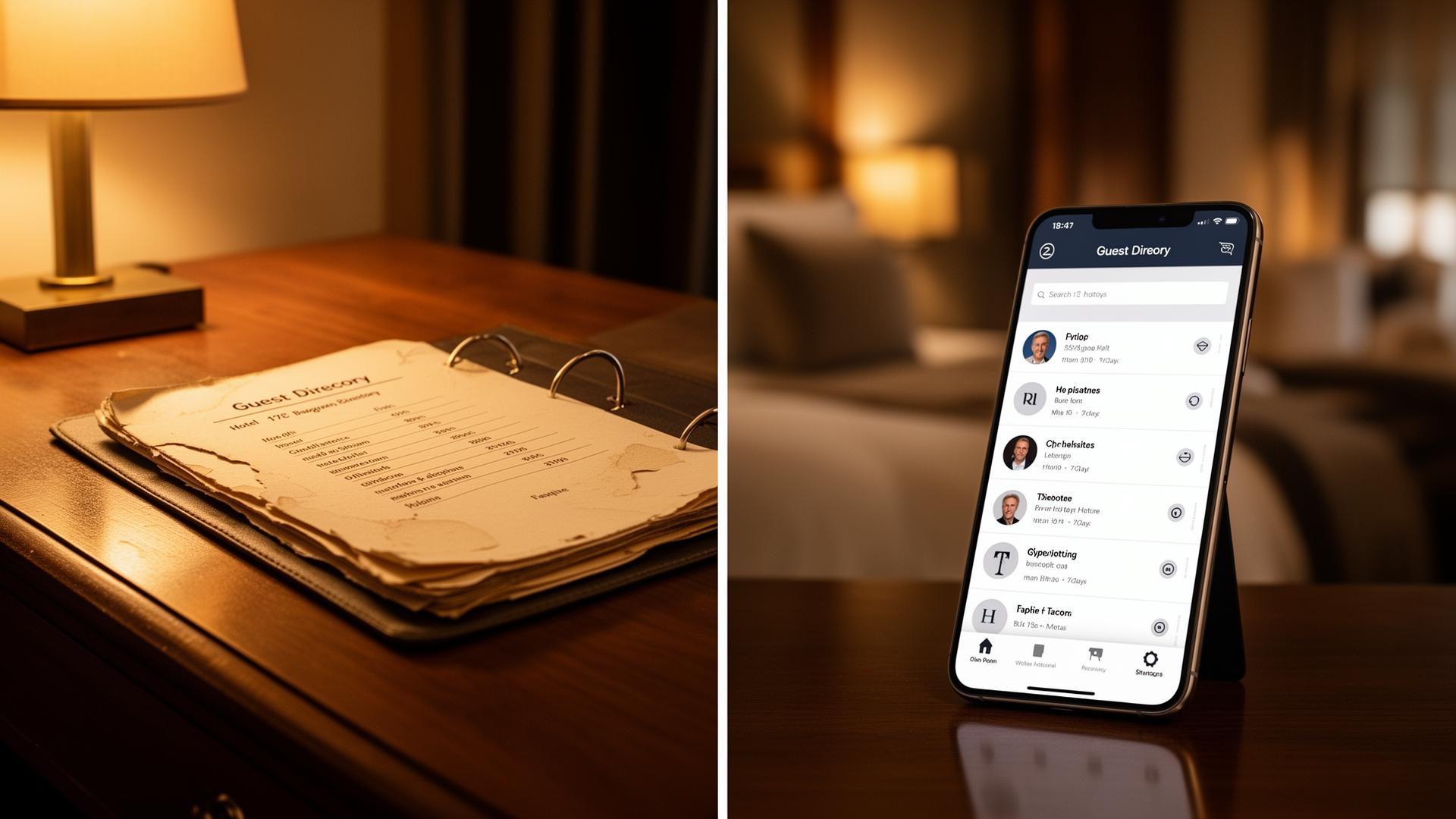
The guest directory has been the most predictable object in a hotel room for thirty years: a leather binder, a printed welcome letter, a laminated breakfast menu, a stapled map of the neighborhood. It worked. It also stopped working — quietly, while nobody updated it — somewhere between the first iPhone and the first time a guest asked you for the Wi-Fi password by WhatsApp at 1 a.m.
This guide compares the two formats on the criteria boutique owners actually care about: guest experience, language coverage, operational cost, perception of the brand, and the speed at which you can change a single line of text. We'll target one decision: should the next directory you produce be printed, or should it be a digital room directory delivered by QR?
Translation. A paper binder ships in one language, maybe two. A digital guest directory detects the browser locale and serves Italian, English, German, French, Spanish, Montenegrin — without you printing a single extra page. For a property with mixed European guests, this single difference is decisive.
Live updates. The breakfast slot moved from 8 to 7:30. On paper, that's a reprint, a relamination, and a maid swapping pages in twelve rooms. In a digital directory, it's an edit field and a save button — the next guest to scan sees the new time. Multiply by every menu change, seasonal recommendation, or rate update across a season.
WhatsApp integration. Paper sends guests to the reception desk; digital sends them to a pre-filled WhatsApp thread that already carries the room number and the request context. The friction collapses from 'find the front desk' to 'tap once'. That's the upsell channel hotels keep underusing because the binder doesn't open it.
Cost honesty. A printed boutique-grade binder runs €40–€90 per room with reprints, plus staff time to keep it current. A digital room directory replaces that with a single QR sticker per room and a software subscription. The break-even arrives in the first reprint cycle.
Perception. Guests notice. A 2024 binder with crossed-out prices reads as 'no one is paying attention'. A clean digital interface reads as 'this property is run by people who care'. Boutique brands win on the second signal — make sure your in-room moment matches the rest of the experience.
The honest case for paper. There is one: a tightly curated, beautifully designed welcome card that sets the tone — typography, a short note from the owner, a recommended walk. Keep that piece. Replace the 40-page binder behind it with a QR that opens a digital guest directory. The card stays as brand, the directory becomes infrastructure.
If you're choosing today, choose digital and keep one printed touch as the welcome. The maintenance cost drops, the language coverage expands, and the WhatsApp channel finally opens — which is what most boutique owners are quietly trying to fix anyway.